Choosing among China’s top 10 hot runner and cold runner mold makers requires more than comparing factory photos or quoted prices. Buyers should examine mold trials, steel certificates, cavity balance, maintenance records, and after-sales response. A polished website proves little. A stable sample does.
Many purchasing teams still ask, “what is the difference between hot runner and cold runner molds?” The answer affects cycle time, material waste, part quality, and operating cost. Hot runner molds keep plastic molten inside heated channels, reducing runners and scrap. Cold runner molds solidify the runner with each shot, creating additional material and removal work. Hot systems may improve automation, but they demand careful temperature control and higher initial investment. Cold systems are often simpler, cheaper, and easier to service.
John Bozzelli, a respected scientific molding specialist and founder of Scientific Molding, has emphasized, “The mold is a system, not merely a piece of steel.” That idea matters when evaluating Chinese manufacturers. A capable supplier should explain gate design, cooling layout, valve timing, resin behavior, and validation data in practical language. Ask to see a mold running at production speed. Watch the nozzle area. Listen for unstable pressure or inconsistent ejection.
This comparison is not perfect. Supplier rankings can change with project complexity, staffing, and regional support. A large maker may not suit a small precision order. A smaller factory may deliver closer engineering attention. The following guide examines ten leading Chinese mold makers through technical capability, reliability, communication, and real-world production value. Be careful with easy claims. Evidence matters more.
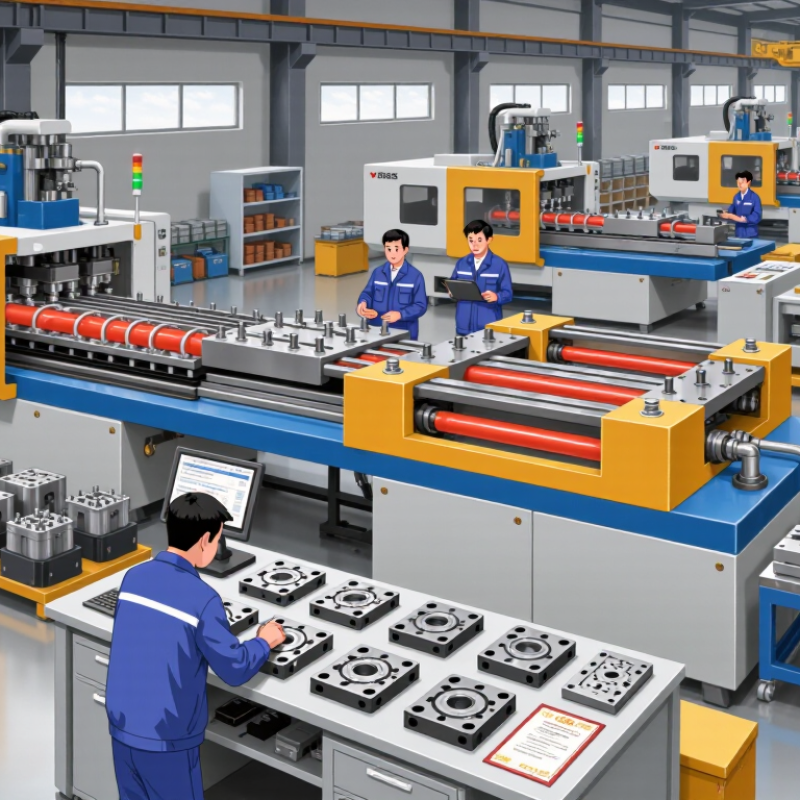
Hot Runner and Cold Runner Molds: Definitions and Basic Structures
China Top 10 Hot Runner vs Cold Runner Mold Makers?
Hot runner and cold runner molds differ mainly in material delivery. A cold runner mold uses a sprue, runners, and gates cut into the mold plates. After cooling, the runner becomes solid waste or requires regrinding. A hot runner mold uses heated manifolds and nozzles. These components keep plastic molten until it enters the cavity. The structure is more complex, but it can reduce runner waste and shorten cycles.
PlasticsEurope reported global plastics production at 400.3 million tonnes in 2022. This scale makes material efficiency a serious manufacturing issue. Industry experience shows cold runners remain practical for simple parts, prototypes, and lower-volume orders. Hot runners suit multi-cavity tools, thin walls, and high-output production. However, temperature control must be stable. One poorly balanced nozzle can create burns, stringing, or uneven filling. Design assumptions sometimes fail on the factory floor.
Tips:
Ask mold makers for cavity-balance studies, thermal maps, and sample data. Check whether the controller supports precise zone monitoring. For cold runners, inspect gate layout and runner weight. For hot runners, verify nozzle maintenance access. A lower purchase price may hide higher scrap, cleaning, or downtime costs. According to a 2024 market assessment by Grand View Research, injection molding demand continues expanding across packaging, automotive, and medical applications. Yet market forecasts are not production guarantees. Your resin, part geometry, and annual volume matter more.
Key Differences Between Hot Runner and Cold Runner Mold Systems
When comparing China’s top mold makers, the real question is not simply hot runner versus cold runner. It is how each system fits the product, resin, output, and maintenance plan. A hot runner mold keeps plastic molten inside heated components. It reduces runner waste and can shorten cycle times. This matters for high-volume parts with strict material control. However, temperature balance must be precise. A small thermal error may cause drooling, color variation, or uneven filling.
Cold runner molds use cooled channels that solidify with each shot. They usually cost less to build and are easier to understand during maintenance. Technicians can inspect the runner physically. The drawback is extra material, longer cooling time, and possible regrind management. That sounds simple, but scrap rates can become expensive on large production runs. Not always obvious.
A capable mold maker should explain gate location, cooling layout, steel selection, and mold-flow risks before quoting. Ask for dimensional reports, trial-shot records, and a clear spare-parts plan. For hot runners, review heater control, manifold balancing, and valve-gate access. For cold runners, examine runner size, ejection reliability, and weld-line risks. I have seen purchasing teams focus on the initial price and overlook cleaning time. That is an easy mistake. A cheaper mold can demand more labor every production day. Even experienced teams should challenge their first choice, especially when the part design is still changing.
Criteria for Evaluating China’s Mold Manufacturers
China Top 10 Hot Runner vs Cold Runner Mold Makers?
Evaluating China’s mold manufacturers requires more than comparing quotations. A 2024 market report by Grand View Research estimates the global injection molding machine market exceeded USD 20 billion in 2023. This demand increases pressure on tooling suppliers to prove capacity, not just offer low prices. Ask for audited production records, mold flow analysis, steel certificates, and dimensional inspection reports. ISO 9001 helps, but certification alone cannot prove stable mold performance.
Hot runner projects need deeper technical checks. Review temperature-controller accuracy, gate design, thermal balancing, leakage prevention, and access to replacement parts. A factory should show trial-shot data, including cycle time, part weight, warpage, and injection pressure. Cold runner molds deserve different questions. Measure runner weight against finished-part weight, regrind limits, cooling uniformity, and automatic degating capability. The 2023 PlasticsEurope report recorded 400.3 million tonnes of global plastics production in 2022, highlighting why material efficiency matters. Still, a low runner ratio may hide poor cycle stability.
Visit the workshop if possible. Watch electrode machining, polishing, assembly, and mold testing. Check whether operators record deviations or quietly correct them. That detail matters. Request two customer references in similar materials and part geometries, without relying on polished case studies. Some suppliers promise 0.01-millimeter precision, yet their inspection equipment is poorly calibrated. This is where evaluation becomes uncomfortable: the cheapest offer may be rational, but only after maintenance, downtime, spare parts, and rejected parts enter the calculation.
Criteria for Evaluating China’s Hot Runner and Cold Runner Mold Makers
The chart presents a neutral evaluation framework for comparing mold manufacturers. The suggested weighting emphasizes mold quality, engineering capability, delivery reliability, runner-system expertise, quality assurance, service support, and export documentation. These are assessment weights rather than company-specific performance results.
China’s Top 10 Hot Runner and Cold Runner Mold Makers
China’s top 10 hot runner and cold runner mold makers should be assessed through measurable production evidence. MarketsandMarkets’ 2024 analysis forecasts high-single-digit growth for the global hot runner market through 2028. The report links this growth to reduced material waste, faster cycles, and automated molding. China remains important because its tooling base supports electronics, automotive, medical, and consumer-product production at large volumes.
A credible top-ten review should examine steel certificates, cavity balance, cooling analysis, and documented trial results. Hot runner specialists need precise temperature control and leak-resistant manifolds. Cold runner makers should demonstrate stable filling, easy runner removal, and economical maintenance. ISO 9001 certification helps, but it is not enough. Site audits, sample inspections, and references from comparable projects reveal more. Small details matter. Check mold surfaces under direct light.
Grand View Research reported strong expansion in the global injection molding machine market, supported by demand for lightweight and mass-produced components. That trend raises expectations for Chinese mold suppliers, especially on cycle time and repeatability. Still, rankings can mislead. A company may produce excellent automotive molds but struggle with thin-wall packaging. Another may offer low pricing while lacking engineering support after shipment. Buyers should compare quoted tolerances with actual measurement records, not attractive brochures. My practical view is imperfect but useful: the best supplier is rarely the cheapest, and a top-ten list needs regular revision when equipment, staff, or quality systems change.
China Top 10 Hot Runner vs Cold Runner Mold Makers? - China’s Top 10 Hot Runner and Cold Runner Mold Makers
| No. |
Evaluation Dimension |
Hot Runner Mold |
Cold Runner Mold |
| 1 |
Runner System |
Heated manifolds and nozzles keep the polymer molten during molding. |
The runner is filled and cooled with the molded part or as a separate runner. |
| 2 |
Initial Tooling Cost |
Usually higher because of heaters, temperature controllers, manifolds, and hot nozzles. |
Generally lower because the mold uses simpler runner and cooling components. |
| 3 |
Material Waste |
Very low runner waste; this is beneficial when processing expensive, filled, recycled, or engineering resins. |
Produces a runner that may require regrinding, recycling, or disposal. |
| 4 |
Cycle Time |
Can reduce total cycle time by eliminating runner cooling, although part cooling remains necessary. |
The runner must cool before ejection, which can increase the molding cycle. |
| 5 |
Part Quality |
Offers balanced filling and reduced weld-line risk when the system is correctly designed and controlled. |
Can provide stable quality, but runner layout and gate design may create more pressure loss or visible gate marks. |
| 6 |
Mold Maintenance |
Requires inspection of heaters, thermocouples, controllers, seals, and nozzle tips. |
Usually easier to maintain because the runner system has fewer heated components. |
| 7 |
Color Change |
May require more purging time and material because polymer remains inside the heated channels. |
Usually allows simpler color changes because less material remains in heated passages. |
| 8 |
Energy Consumption |
Uses additional electrical energy to heat and regulate the runner system. |
Usually has lower mold-side energy demand because no runner heating is required. |
| 9 |
Production Volume |
Often more economical for high-volume production because material and cycle-time savings can offset the higher investment. |
Well suited to low-to-medium volumes, prototypes, and applications where tooling cost is the main concern. |
| 10 |
Typical Application Fit |
Suitable for multi-cavity packaging, automotive components, medical parts, consumer products, and large production runs. |
Suitable for simple parts, short runs, development tooling, commodity materials, and cost-sensitive projects. |
Note: Actual performance, cost, cycle time, and material savings depend on part geometry, resin type, cavity count, gate design, molding-machine settings, and production volume.
How to Choose the Right Chinese Mold Maker for Your Project
How to Choose the Right Chinese Mold Maker for Your Project
China’s mold sector offers many capable suppliers, but price alone is a weak filter. PlasticsEurope’s Plastics – the Fast Facts 2024 reports global plastics production reached 413.8 million tonnes in 2023. That scale increases demand for reliable, repeatable tooling. Ask each mold maker for recent experience with your resin, part size, tolerance, and annual volume.
Hot runner molds
Hot runner molds reduce runner waste and support faster cycles, but they require careful thermal balancing. Cold runner molds usually cost less and simplify maintenance, yet they may create more scrap. Request mold-flow analysis, steel certificates, cooling-channel layouts, and trial-shot data. A serious supplier should explain gate location, venting, shrinkage, and expected maintenance intervals without hiding behind technical language.
Check the workshop directly, or use an independent audit. Review machining equipment, inspection records, spare-part control, and sample traceability. ISO 9001 certification helps, but it does not guarantee strong mold design. The ISO Survey 2022 recorded millions of certified management systems worldwide, showing certification is common rather than decisive. Ask for references from similar projects, not attractive showroom samples.
Do not ignore communication. Weekly dimensional reports, marked-up drawings, and clear change approval prevent expensive misunderstandings. One overlooked detail matters: who owns the final CAD files and maintenance instructions? Market reports often disagree on tooling growth, so verify claims against production evidence. A perfect mold maker does not exist. A transparent one is easier to correct.
FAQS
A cold runner uses solid channels inside the mold plates. The runner becomes waste after cooling. A hot runner uses heated manifolds and nozzles. Plastic stays molten until it enters the cavity.
Cold runners suit simple parts, prototypes, and smaller production volumes. They usually cost less initially. They are easier to understand and maintain. Runner waste still needs attention.
Hot runners suit multi-cavity tools, thin walls, and high-volume production. They can reduce material waste and shorten cycles. Stable temperature control is essential. One unbalanced nozzle can cause burns or uneven filling.
Compare material waste, maintenance, cleaning, spare parts, and downtime. Also review cycle time and rejected parts. A cheaper mold may become expensive later. The first quotation is not the whole calculation.
Request steel certificates, mold flow analysis, and dimensional inspection reports. Ask for thermal maps on hot runner projects. Request cavity-balance studies and trial-shot data. Useful data includes part weight, warpage, pressure, and cycle time.
Check temperature-controller accuracy and zone monitoring. Review gate design, thermal balance, and leakage prevention. Confirm access for nozzle maintenance. Replacement parts should be available and clearly identified.
Measure runner weight against finished-part weight. Review cooling uniformity and gate layout. Ask about regrind limits and automatic degating. A low runner ratio does not guarantee stable production.
Watch machining, polishing, assembly, and mold testing. Inspect mold surfaces under direct light. Check whether workers record deviations. Quiet corrections can hide recurring problems. This part is uncomfortable, but important.
Rankings can provide a starting point, not a final decision. A supplier may excel with automotive parts but struggle with thin walls. Compare actual measurement records with quoted tolerances. The best supplier is not always the cheapest. My judgment may be incomplete. Recheck it.
Conclusion
This article explains the basic definitions and structures of hot runner and cold runner molds, helping readers understand how each system delivers molten plastic into the cavity. It clearly answers the question, “what is the difference between hot runner and cold runner molds,” by comparing material flow, runner design, waste production, cycle efficiency, temperature control, maintenance, and overall tooling costs. Hot runner systems can reduce runner waste and support faster production, while cold runner molds may offer simpler construction, easier maintenance, and lower initial investment.
The article also presents practical criteria for evaluating China’s mold manufacturers, including engineering expertise, manufacturing accuracy, quality control, equipment, communication, delivery capability, customization, and after-sales support. It then introduces a neutral top-ten selection of Chinese hot runner and cold runner mold makers without focusing on brand promotion. Finally, it provides a structured approach to choosing the right manufacturer according to product design, material, production volume, budget, quality requirements, and long-term project goals.

 Ohio Machine