How to Choose the Right Plastic Injection Mold Material?

Time:2026-10-09 Author:Ethan
0%

Choosing the right mold steel is a quiet decision with expensive consequences. It affects part quality, cycle time, maintenance, and tool life. The best answer depends on resin chemistry, production volume, pressure, temperature, and surface requirements.

John Bozzelli, a respected scientific molding consultant, has said, “The mold is the heart of the injection molding process.” That principle guides this discussion. When molding glass-filled nylon, for example, abrasive fibers can wear ordinary tool steel quickly. Hardened steel may provide better durability. For corrosive materials, such as PVC or flame-retardant compounds, stainless steel can reduce staining and premature damage. Low-volume production may justify pre-hardened steel, while millions of cycles may require a harder, more wear-resistant grade.

The real challenge is learning how to choose the right plastic injection mold material without relying on a familiar grade. Cost alone can mislead. A cheaper material may increase polishing work, downtime, or replacement frequency. A premium steel may also be wasteful for a short production run. Cooling channels, mold geometry, ejection loads, and the required surface finish must be considered together.

There is no perfect material.

A practical selection process compares hardness, toughness, corrosion resistance, thermal conductivity, machinability, and expected shots. It should also include supplier certificates and documented testing. Still, uncertainty remains. Resin formulas change, production conditions drift, and early assumptions can fail. Careful engineers leave room to review those assumptions before the mold reaches the press.
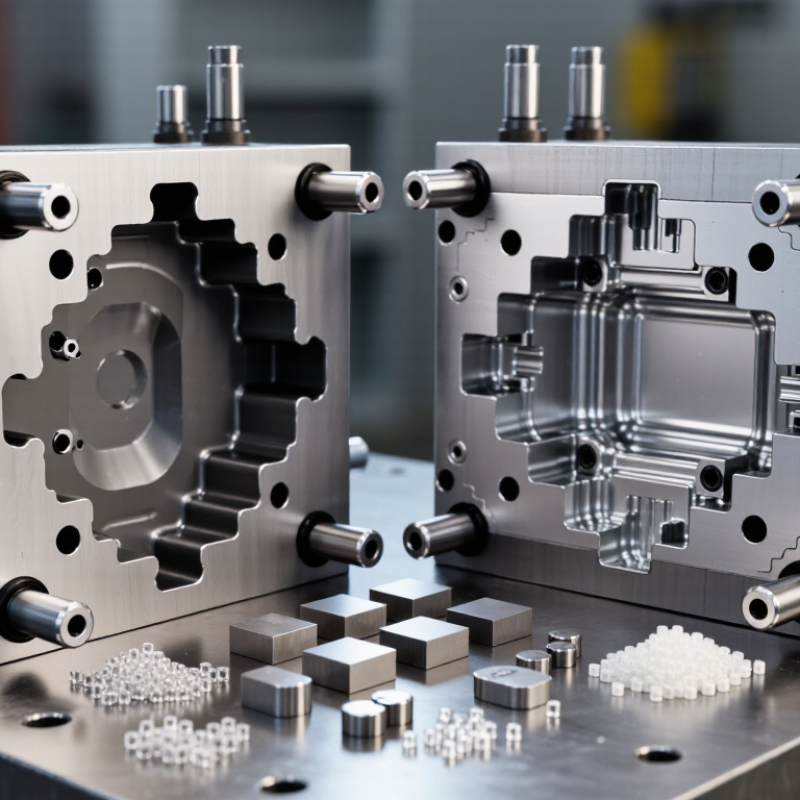
How to Choose the Right Plastic Injection Mold Material?

Define the Mold’s Production Requirements

Before choosing a plastic injection mold material, define the mold’s production requirements. Start with the expected part quantity, resin type, cycle time, and required service life. A mold producing 5,000 parts needs different steel than one producing 500,000 parts. Volume changes everything.

Examine the plastic’s behavior during molding. Abrasive or glass-filled resins can wear mold surfaces quickly. Corrosive resins may require stronger corrosion resistance. Record the expected melt temperature, injection pressure, cooling method, and ejection frequency. These details guide decisions about hardness, toughness, thermal conductivity, and machinability. Dimensional tolerances also matter. A tight tolerance can demand stable materials and careful heat treatment. Do not guess.

Tips: Ask the molding technician to review the material plan before machining begins. Check the machine’s clamping force and maximum mold size. Confirm whether the surface needs polishing, texturing, or improved release. Consider maintenance access, spare inserts, and future design changes. A replaceable insert may cost more initially, but it can reduce later repair time.

Production requirements are not always fixed. Early estimates may be too optimistic, especially when demand is uncertain. Recheck the annual volume after prototype testing and customer feedback. A highly durable mold material can be wasteful for short production runs, while a low-cost option may fail under continuous operation. Document every assumption, including expected downtime and acceptable repair frequency. Practical experience shows that the cheapest material is rarely the cheapest complete solution.

How to Choose the Right Plastic Injection Mold Material?

Define the Mold’s Production Requirements

The chart provides indicative suitability ratings from 1 to 5 for commonly used mold materials. P20 tool steel is a balanced choice for medium production volumes, H13 tool steel is better suited to high-temperature or high-wear applications, S136 stainless tool steel offers strong corrosion resistance and good surface quality, while 7075 aluminum is useful for prototypes and short production runs because of its fast machining and heat-transfer capability. Final material selection should also consider resin type, mold life, cooling requirements, surface finish, and production volume.

Compare Common Plastic Injection Mold Materials

How to Choose the Right Plastic Injection Mold Material?

Compare Common Plastic Injection Mold Materials

Plastic injection mold material affects cycle life, surface quality, maintenance, and part consistency. According to Grand View Research’s 2024 tooling market analysis, demand is rising for molds that support shorter cycles and higher production efficiency. Material selection therefore needs more than a low purchase price. It should match resin type, annual volume, mold temperature, and expected appearance.

P20 tool steel remains a practical choice for general-purpose molds. It typically reaches about 28–36 HRC and machines easily after pre-hardening. It suits moderate production and large housings.

H13 steel offers higher thermal-fatigue resistance, usually around 44–52 HRC after treatment. It works better for hot molds, abrasive resins, and repeated thermal cycling. However, machining and polishing require more time. That cost is easy to underestimate.

Stainless mold steel, such as 420-type grades, can provide strong corrosion resistance and polished cavities. This matters when processing flame-retardant or moisture-sensitive materials. Typical hardness may approach 48–52 HRC after hardening, according to technical data aligned with ASTM A681 classifications.

Aluminum molds are faster to machine and lighter, but their lower wear resistance limits long production runs. A 2023 report from the International Aluminium Institute notes aluminum’s strong recyclability advantage, yet recyclability does not solve cavity wear. A cheaper mold can become expensive after repeated repairs. The best choice is not always the hardest steel.

Match Material Properties to Mold Performance Needs

Choosing a plastic injection mold material starts with performance, not a familiar steel grade. The mold must survive pressure, heat, abrasion, corrosion, and repeated opening. Match each demand to a measurable property. Hardness supports wear resistance, while toughness helps prevent chipping around thin cores and sharp edges. Thermal conductivity affects cooling time and warpage. That detail often decides whether a cycle is stable or frustrating.

For glass-filled polymers, a harder mold surface usually handles abrasive flow better. However, excessive hardness can make repairs and machining more difficult. Corrosive additives may require corrosion-resistant stainless material, especially around gates and water channels. High-temperature polymers place greater demands on temper resistance. Use hot-work tool steel when heat and pressure remain severe. Aluminum can cool quickly, but it may wear faster in demanding production. Fast cooling is useful.

Review the resin datasheet, expected shot count, surface finish, and maintenance plan before selecting material. Then confirm the choice through mold-flow analysis and a controlled production trial. Inspect the first parts for burn marks, drag lines, flash, and uneven gloss. These physical clues often reveal a mismatch between mold properties and process conditions. I once treated polishing quality as a minor issue; it later affected release and appearance. That was a useful correction. The first trial may still challenge the original decision.

Evaluate Cost, Machining, Maintenance, and Service Life

Choosing mold material by purchase price alone is a costly shortcut. The U.S. Department of Energy’s Operations and Maintenance Best Practices Guide reports that preventive maintenance can reduce costs by 12–18% compared with reactive work. That saving begins with material selection. Hardened tool steel usually costs more to machine, but it can resist abrasion from glass-filled polymers. Prehardened steel often reduces machining time and suits moderate production volumes.

Machining cost depends on hardness, geometry, and required surface finish. ASM Handbook, Volume 4, identifies mold steels around 28–35 HRC as easier to cut than hardened grades above 45 HRC. The difference becomes visible on a deep cavity: more passes, slower feeds, and additional polishing hours. I have seen teams ignore this calculation. The mold looked affordable. The workshop bill did not.

Maintenance changes the decision again. Stainless mold steel can resist corrosion from moisture, acidic additives, or poorly dried resins. That protection matters around cooling channels and polished cores. However, stainless grades may require slower cutting and careful heat treatment. The maintenance plan should specify cleaning intervals, lubrication points, inspection frequency, and expected cycles. Industry tooling guidance commonly places service life above one million cycles for properly designed hardened molds, but this figure is not guaranteed. Poor cooling can distort the cavity long before wear becomes obvious. A realistic quotation should separate material cost, machining hours, maintenance labor, and replacement risk. That comparison is less attractive, but more reliable.

Select the Best Material for Your Injection Molding Process

How to Choose the Right Plastic Injection Mold Material?

Select the Best Material for Your Injection Molding Process

The right mold material depends on production volume, plastic type, part design, and required surface quality. Aluminum supports fast prototypes and short runs because it machines quickly and transfers heat efficiently. Pre-hardened steel suits general production with balanced strength, cost, and maintenance needs. For glass-filled plastics, hardened tool steel usually resists abrasive wear better. Corrosive materials may require corrosion-resistant steel.

Do not judge material only by purchase price. Consider cycle time, polishing requirements, cooling performance, and expected mold life. A material with higher thermal conductivity can shorten cooling time, but it may not handle repeated high-pressure cycles well. Deep ribs, sharp corners, and tight tolerances also influence the choice. Mold makers should review resin data, injection pressure, operating temperature, and planned maintenance before cutting steel.

Tips: Match the mold material to the resin’s additives. Check hardness after heat treatment. Confirm cooling behavior with a trial mold or simulation. Inspect the first production parts carefully. A first choice can still be wrong. Real results may reveal uneven cooling, difficult polishing, or unexpected wear. Record these findings and adjust the next design instead of repeating the same assumption. Reliable decisions come from technical data, shop experience, and measured production feedback.

FAQS

Why does plastic injection mold material matter?

It affects mold life, cooling speed, surface finish, maintenance, and part consistency. The cheapest option may cost more later.

When is pre-hardened tool steel a practical choice?

It suits general-purpose molds, moderate production volumes, and large housings. It machines easily and offers balanced performance.

When should hot-work tool steel be considered?

Choose it for high mold temperatures, abrasive resins, and repeated thermal cycling. It resists thermal fatigue better.

What are the advantages of stainless mold steel?

It offers corrosion resistance and polished cavities. This helps with moisture-sensitive or chemically aggressive materials.

Are aluminum molds suitable for every production run?

No. They machine quickly and cool efficiently, but cavity wear can limit long production runs.

Which mold material works better with glass-filled polymers?

A harder mold surface usually handles abrasive glass fibers better. Still, excessive hardness can complicate repairs.

How does thermal conductivity affect molded parts?

It influences cooling time, warpage, and cycle stability. Faster cooling can help, but uneven cooling may create visible defects.

What information should guide material selection?

Review the resin datasheet, shot count, mold temperature, surface finish, and maintenance plan. Do not rely on habit alone.

How can a production trial confirm the material choice?

Inspect early parts for burn marks, drag lines, flash, and uneven gloss. These clues may expose a material mismatch.

Can a harder mold always provide better performance?

Not always. Hardness improves wear resistance, but toughness, machinability, corrosion resistance, and repair needs also matter.

Conclusion

Choosing the right plastic injection mold material begins with clearly defining the mold’s production requirements, including the plastic type, expected production volume, part complexity, molding temperature, pressure, and surface finish. These factors help determine whether a material should prioritize hardness, wear resistance, corrosion resistance, thermal conductivity, toughness, or dimensional stability. Common mold materials can offer different combinations of performance, so the selection should be based on the actual demands of the application rather than general preference.

To understand how to choose the right plastic injection mold material, manufacturers should compare material properties with expected mold performance and evaluate the complete lifecycle cost. Machining difficulty, heat treatment, maintenance needs, repairability, and anticipated service life all influence the final decision. A material with a higher initial cost may provide better durability and fewer production interruptions, while a simpler option may be suitable for lower-volume projects. The best choice balances performance, efficiency, budget, and long-term reliability within the specific injection molding process.

Ethan

Ethan

Ethan is a seasoned marketing professional with a deep expertise in our company's innovative product line. With a passion for sharing knowledge and insights, he takes the lead in regularly updating our corporate blog, where he explores industry trends, product features, and effective marketing......